The 2026 Technical Handbook for Monel and Hastelloy Alloys: Strategic Material Selection for Critical Industrial Environments
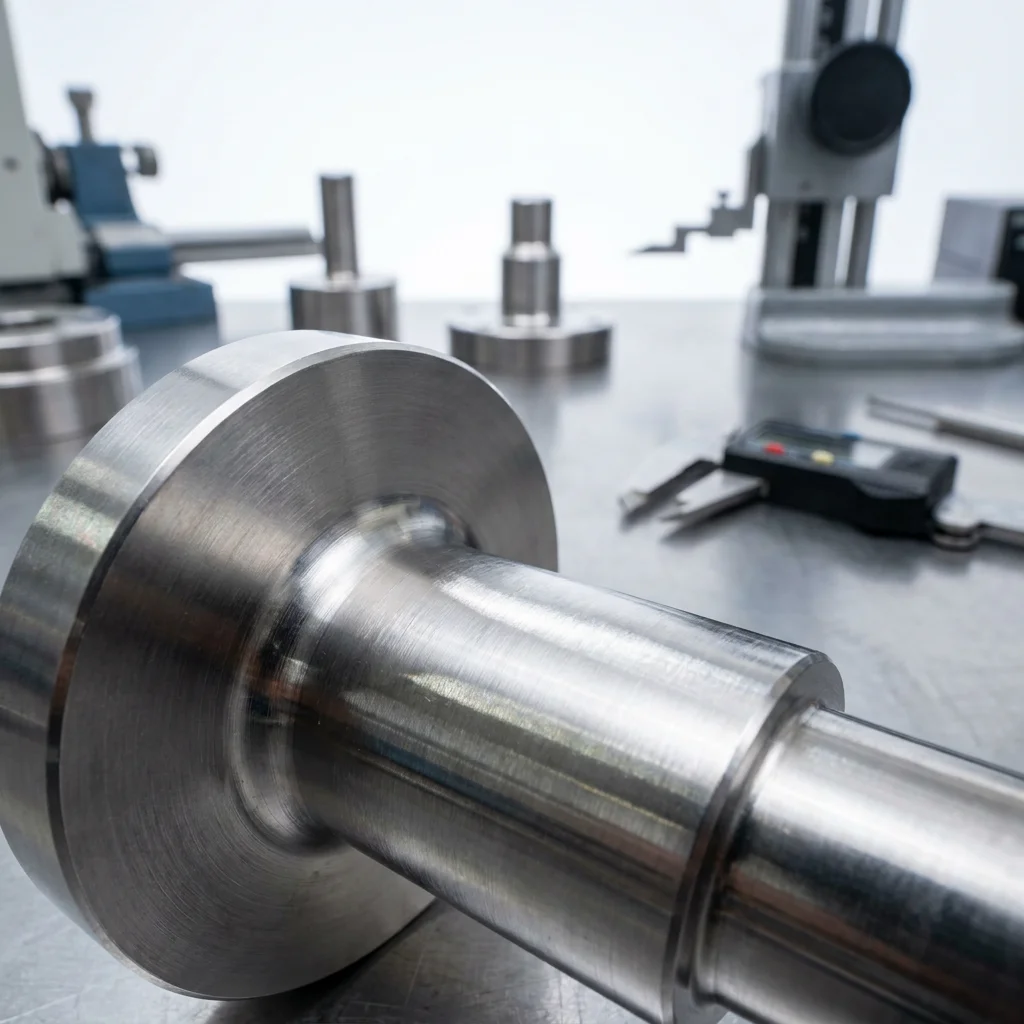
The 2026 Technical Handbook for Monel and Hastelloy Alloys: Strategic Material Selection for Critical Industrial Environments
As we advance into the second quarter of 2026, the industrial landscape continues to demand materials that can perform beyond the limits of conventional metallurgy. High-performance nickel-based alloys, specifically the Monel and Hastelloy series, have become the non-negotiable standard for environments where failure is not an option. From the aggressive chemistries of modern pharmaceutical synthesis to the corrosive depths of subsea oil and gas extraction, these alloys provide the reliability, longevity, and safety required for 2026's most ambitious projects. This technical handbook provides an exhaustive analysis of the chemical compositions, mechanical properties, and specialized applications of Monel and Hastelloy, serving as a strategic resource for B2B engineering and procurement teams.
1. The Metallurgical Foundation of Nickel-Based Alloys in 2026
The transition toward more efficient and sustainable industrial processes in 2026 has placed a renewed focus on material life-cycle analysis. Nickel-based alloys are prized not just for their immediate performance but for their ability to significantly extend the service life of equipment, thereby reducing the total cost of ownership and environmental impact. By precisely controlling the additions of copper, chromium, molybdenum, and other elements, metallurgists have created a family of alloys that are immune to many of the most common failure modes in industrial engineering, such as stress corrosion cracking (SCC), pitting, and intergranular attack.
At the core of these alloys' performance is their ability to form stable, protective passive films. In the case of Monel, the nickel-copper synergy provides exceptional resistance to reducing environments. For Hastelloy, the high molybdenum and chromium content enables resistance to both oxidizing and reducing media, even in the presence of highly corrosive halides like chlorides.
2. Monel Alloy s: The Power of Nickel-Copper Synergy
Monel is a group of nickel alloys, primarily composed of nickel (up to 67%) and copper, with small amounts of iron, manganese, carbon, and silicon. In 2026, Monel remains the material of choice for marine and chemical environments where high ductility and resistance to alkaline and salt solutions are required.
Monel 400 (UNS N04400)
Monel 400 is the most versatile of the Monel family. It is a solid-solution alloy that can be hardened only by cold working. It is known for its excellent resistance to rapidly flowing seawater, steam at high temperatures, and caustic solutions. In 2026, it is a staple in the marine industry for propeller shafts, valves, and fasteners. It is also uniquely resistant to hydrofluoric acid in all concentrations up to the boiling point, making it critical for 2026's chemical processing facilities.
Monel K-500 (UNS N05500)
By adding aluminum and titanium to the nickel-copper base, Monel K-500 offers the same corrosion resistance as Monel 400 but with the added benefits of significantly higher strength and hardness. This is achieved through precipitation hardening (age hardening). In 2026, Monel K-500 is the primary choice for pump shafts, oil-well tools, and high-strength fasteners in offshore environments where mechanical load and corrosion occur simultaneously.
| Alloy Grade | Main Composition | Yield Strength (MPa) | Key Advantage in 2026 |
|---|---|---|---|
| Monel 400 | Ni 63%, Cu 31% | 240 - 550 | Unmatched resistance to HF acid and seawater |
| Monel K-500 | Ni, Cu, Al, Ti | 790 - 1100 | High strength with marine corrosion resistance |
| Monel R-405 | Ni, Cu, S | 240 - 550 | Free-machining grade for high-volume parts |
3. Hastelloy Alloys: The Pinnacle of Chemical Resistance
Hastelloy is a trademarked name for a series of highly corrosion-resistant nickel-based superalloys. In 2026, Hastelloy is synonymous with "extreme protection" in the chemical processing, pharmaceutical, and aerospace sectors.
Hastelloy C-276 (UNS N10276)
Hastelloy C-276 is perhaps the most famous corrosion-resistant alloy in the world. Its high molybdenum (15-17%) and chromium content provides exceptional resistance to pitting, crevice corrosion, and stress corrosion cracking. In 2026, it is the standard for flue gas desulfurization (FGD) systems and chemical reactors that handle aggressive organic and inorganic acids. It is one of the few materials that can withstand the corrosive effects of wet chlorine gas and hypochlorite solutions.
Hastelloy C-22 (UNS N06022)
Hastelloy C-22 is a versatile nickel-chromium-molybdenum-tungsten alloy with better overall corrosion resistance than other Ni-Cr-Mo alloys available in 2026. It has outstanding resistance to pitting, crevice corrosion, and stress corrosion cracking. It is particularly effective in oxidizing aqueous media, including wet chlorine and mixtures containing nitric acid. In 2026, it is preferred for multi-purpose chemical plants where the process chemistry varies significantly.
Hastelloy B-3 (UNS N10675)
Unlike the C-series, Hastelloy B-3 is specifically designed for resistance to hydrochloric acid at all concentrations and temperatures. It also has excellent resistance to hydrobromic and sulfuric acids. Its primary advantage in 2026 is its superior thermal stability compared to the older B-2 grade, making it easier to fabricate and weld without the risk of embrittlement.
| Alloy Grade | Main Alloying Elements | Resistance to Pitting | Best Application Environment |
|---|---|---|---|
| Hastelloy C-276 | Ni, Cr, Mo, W | Exceptional | Wet chlorine, mixed acids, FGD systems |
| Hastelloy C-22 | Ni, Cr, Mo, W | Superior | Pharmaceuticals, oxidizing/reducing media |
| Hastelloy B-3 | Ni, Mo | Moderate | Pure Hydrochloric acid at high temps |
| Hastelloy X | Ni, Cr, Fe, Mo | Good | Gas turbine engines (high temp oxidation) |
4. Critical Applications in the 2026 Industrial Sector
The versatility of Monel and Hastelloy allows them to solve the most difficult material challenges across diverse industries:
Aerospace and Gas Turbine Technology
In 2026, Hastelloy X is widely used for gas turbine engine components such as combustion chambers, afterburners, and tailpipes. Its ability to maintain strength and oxidation resistance at temperatures up to 1200°C is vital for the next generation of efficient, high-performance engines.
Modern Chemical and Pharmaceutical Synthesis
The trend toward batch-to-continuous manufacturing in the pharmaceutical industry requires materials that can withstand constant exposure to aggressive solvents and catalysts. Hastelloy C-22 is the benchmark for these systems, ensuring zero contamination and maximum equipment uptime. Similarly, in the production of specialized fertilizers, Hastelloy components handle concentrated phosphoric acid with ease.
Marine and Offshore Energy
With the expansion of offshore wind and subsea hydrogen production in 2026, Monel K-500 is more important than ever. It is used for bolts, shafts, and structural components that are constantly submerged in seawater. Its non-magnetic properties also make it useful in electronic sensing equipment used for subsea exploration.
5. Selection and Procurement: Strategic Considerations for 2026
Choosing between Monel and Hastelloy involves a detailed understanding of the specific corrosion mechanisms at play. B2B procurement teams in 2026 must consider:
The Nature of the Medium: Is the environment oxidizing (Chromium-rich alloys like Hastelloy C-series) or reducing (Copper-rich alloys like Monel or Molybdenum-rich like Hastelloy B-3)?
Temperature and Pressure: High-temperature environments often require Inconel or specific Hastelloy grades, while ambient marine environments are perfectly suited for Monel.
Fabrication Requirements: The weldability and machinability of the alloy are critical. Hastelloy C-22, for example, is favored for its resistance to weld-zone corrosion.
Total Lifecycle Cost: While these alloys have a higher initial cost than stainless steel, their multi-decade service life in 2026's harsh conditions provides a much higher return on investment.
6. The Future of Superalloys: Trends for 2027 and Beyond
The development of high-performance alloys is moving toward "High-Entropy Alloys" (HEAs), which utilize multiple principal elements to achieve properties that exceed those of traditional binary or ternary alloys. Additionally, the rise of Additive Manufacturing (3D Printing) is allowing for the production of complex Monel and Hastelloy components with internal cooling channels and optimized geometries, further pushing the boundaries of what is possible in thermal and chemical engineering.
7. Frequently Asked Questions (FAQ) for 2026 Technical Buyers
Q1: Can I use Monel 400 for high-temperature nitric acid?
A: No. Monel 400 is not resistant to highly oxidizing environments like nitric acid. For such applications, a high-chromium alloy like Hastelloy C-22 or specific stainless steels is required in 2026.
Q2: Why is Hastelloy C-276 so widely used compared to other C-series alloys?
A: Its proven track record and versatility across a vast range of environments make it a "safe" choice for many engineers. While C-22 offers better overall performance in some specific oxidizing media, C-276 is often more readily available and more than sufficient for most heavy industrial tasks.
Q3: Is Monel K-500 magnetic?
A: No. One of the primary advantages of Monel K-500 in 2026 is its non-magnetic property, even at very low temperatures. This makes it ideal for sensitive electronic equipment in subsea and aerospace applications.
Q4: How does 2026 manufacturing ensure the quality of these alloys?
A: Every batch of material at DLX Factory is accompanied by a Mill Test Report (MTR) that verifies its chemical composition and mechanical properties. In 2026, we also utilize advanced non-destructive testing (NDT) such as ultrasonic and X-ray analysis to ensure internal integrity.
Conclusion: Partnering for Industrial Resilience
In the high-stakes industrial environment of 2026, the choice of material is the difference between a successful project and a catastrophic failure. Monel and Hastelloy represent the peak of nickel-based metallurgy, offering solutions to the most aggressive corrosion and thermal challenges. At DLX Factory, we are dedicated to providing our global partners with the highest quality alloys, technical expertise, and supply chain reliability. Whether you are building a new chemical plant or maintaining critical subsea infrastructure, our team is ready to help you achieve your engineering goals with precision and confidence.
For more information on our range of Monel and Hastelloy products, custom specifications, or to receive a technical quotation for your 2026 project, please reach out to us. Let us work together to build a more resilient industrial future.
Contact us via the website inquiry form for a detailed technical consultation and quotation.
Publication Date: May 25, 2026
Author: DLX Factory Technical Engineering Division