2026 Engineering Guide: High-Performance Corrosion-Resistant Alloys (CuNi, Monel, Hastelloy, Incoloy)
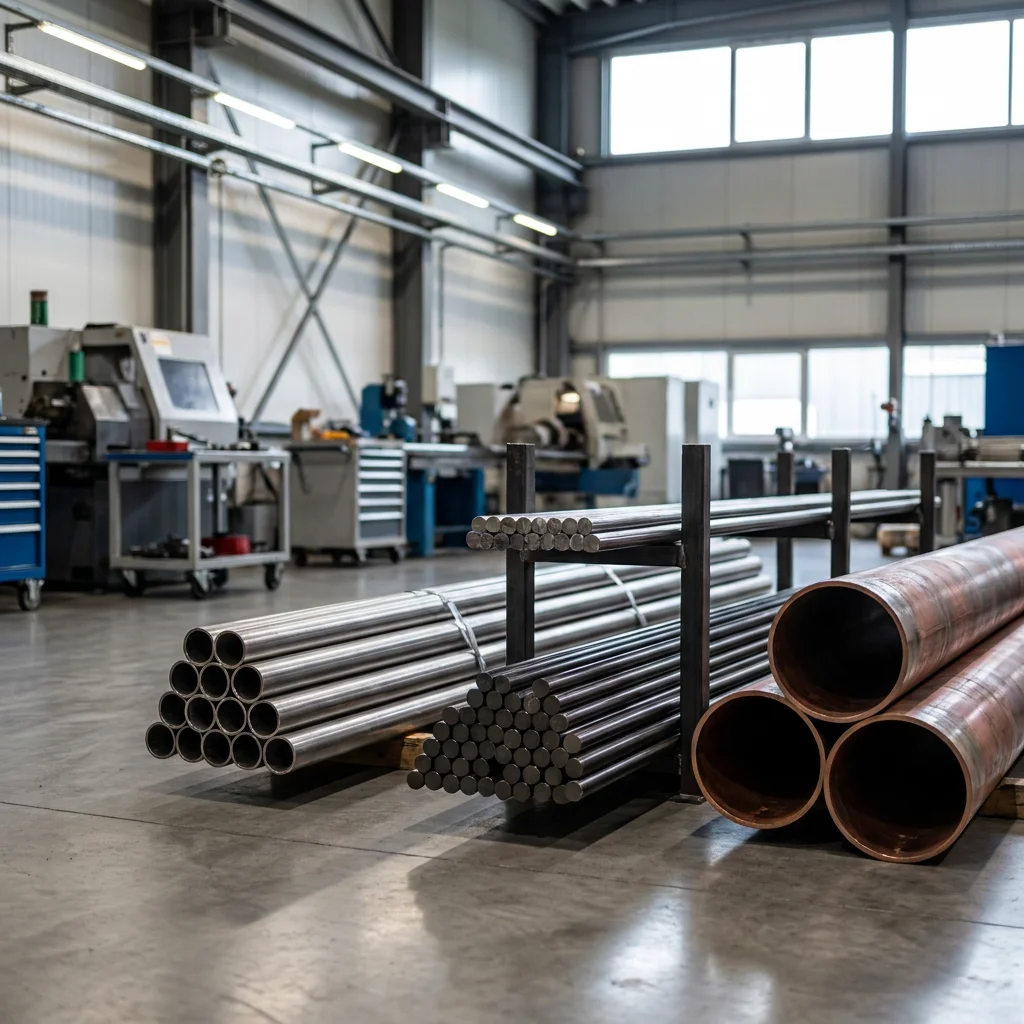
Engineering Excellence with High-Performance Corrosion-Resistant Alloys: A 2026 Guide to CuNi, Monel, Hastelloy, and Incoloy
Published on: April 30, 2026
In the rapidly evolving industrial landscape of 2026, the demand for materials that can withstand the world’s most punishing environments has reached an all-time high. As global infrastructure pushes into deeper oceans, more volatile chemical processes, and higher-altitude aerospace frontiers, the choice of alloy is no longer just a technical detail—it is a cornerstone of operational safety, environmental sustainability, and economic viability. DLX Factory, as a leading global exporter and technical authority based in China, presents this comprehensive guide to the four pillars of corrosion resistance: Copper-Nickel (CuNi), Monel, Hastelloy, and Incoloy.
This article explores the technical nuances, 2026 market trends, and engineering applications that define these high-performance alloys. Whether you are an procurement manager dealing with global supply chain complexities or a materials engineer designing the next generation of offshore platforms, this guide provides the data-driven insights necessary for informed decision-making.
I. Copper-Nickel Alloys (CuNi): The Lifeline of Marine Engineering
Copper-Nickel alloys, specifically the 90/10 and 70/30 variants, remain the gold standard for seawater handling systems. In 2026, the resurgence of maritime trade and the expansion of desalination plants in arid regions have reaffirmed CuNi’s dominance. These alloys are uniquely valued for their inherent biofouling resistance and excellent thermal conductivity.
CuNi 90/10 (C70600)
The 90/10 alloy is the most widely used grade due to its cost-effectiveness and robust resistance to seawater corrosion. Its moderate strength and high ductility make it ideal for piping systems, heat exchangers, and condensers. The addition of small amounts of iron (1.0% to 1.8%) and manganese is critical, as it significantly improves the alloy's resistance to erosion and impingement attack.
CuNi 70/30 (C71500)
For more demanding conditions involving higher water velocities and increased pressure, CuNi 70/30 is the preferred choice. The higher nickel content provides superior resistance to stress corrosion cracking and improved mechanical properties. In 2026, we see 70/30 being heavily utilized in military ship construction and high-pressure steam condensers where failure is not an option.
| Property | CuNi 90/10 (C70600) | CuNi 70/30 (C71500) |
|---|---|---|
| Nickel Content (%) | 9.0 - 11.0 | 29.0 - 33.0 |
| Copper Content (%) | Remainder | Remainder |
| Tensile Strength (MPa) | 275 - 415 | 345 - 550 |
| Yield Strength (0.2% Offset, MPa) | 105 - 345 | 125 - 485 |
| Thermal Conductivity (W/m·K) | 40 - 50 | 29 - 35 |
II. Monel Alloys: Unrivaled Strength in Saline and Acidic Media
Monel alloys, primarily composed of nickel and copper, occupy a unique niche in the metallurgical world. Their ability to maintain high strength across a wide temperature range while resisting both hydrofluoric acid and seawater makes them indispensable for the petrochemical and oil and gas industries.
Monel 400 (UNS N04400)
Monel 400 is a solid-solution alloy that can only be hardened by cold working. It is highly resistant to corrosion by many agents, including rapidly flowing seawater, alkaline solutions, and organic acids. DLX Factory frequently supplies Monel 400 for marine valve components, pump shafts, and chemical processing equipment where durability in brackish water is paramount.
Monel K500 (UNS N05500)
In 2026, Monel K500 has seen increased adoption in deep-sea oil extraction. By adding aluminum and titanium to the nickel-copper base, this alloy undergoes precipitation hardening, resulting in approximately three times the yield strength of Monel 400 while retaining the same corrosion resistance. It is the go-to material for drill collars, mooring bolts, and centrifugal pumps in offshore environments.
| Property | Monel 400 | Monel K500 |
|---|---|---|
| Nickel Content (%) | 63.0 min | 63.0 min |
| Copper Content (%) | 28.0 - 34.0 | 27.0 - 33.0 |
| Al+Ti Content (%) | N/A | 2.3 - 3.15 |
| Tensile Strength (MPa) | 480 - 620 | 965 - 1100 |
| Hardness (Rockwell B/C) | 65 - 80 HRB | 27 - 35 HRC |
III. Hastelloy: The Ultimate Defense Against Aggressive Chemicals
When environments involve extreme oxidizing and reducing acids, standard stainless steels and even some nickel alloys fail. This is where Hastelloy, a family of superalloys, shines. In the 2026 chemical processing industry, Hastelloy is the primary material used to prevent catastrophic equipment failure and minimize downtime.
Hastelloy C276 (UNS N10276)
Hastelloy C276 is perhaps the most versatile corrosion-resistant alloy available today. Its high molybdenum content provides excellent resistance to localized corrosion like pitting and crevice corrosion. It is one of the few materials that can withstand the corrosive effects of wet chlorine gas, hypochlorite, and chlorine dioxide. DLX Factory provides C276 for flue gas desulfurization (FGD) systems and complex chemical reactors.
Hastelloy C22 (UNS N06022)
Hastelloy C22 offers even better overall corrosion resistance than C276 in certain environments, particularly those involving oxidizing acids. With a higher chromium content, C22 provides superior resistance to aqueous corrosion and is widely used in the pharmaceutical industry and nuclear fuel reprocessing.
| Property | Hastelloy C276 | Hastelloy C22 |
|---|---|---|
| Chromium Content (%) | 14.5 - 16.5 | 20.0 - 22.5 |
| Molybdenum Content (%) | 15.0 - 17.0 | 12.5 - 14.5 |
| Tungsten Content (%) | 3.0 - 4.5 | 2.5 - 3.5 |
| Density (g/cm³) | 8.89 | 8.69 |
| Melting Range (°C) | 1325 - 1370 | 1325 - 1390 |
IV. Incoloy: High-Temperature Stability and Oxidation Resistance
The Incoloy series focuses on nickel-iron-chromium compositions. These alloys are designed for high-temperature strength and resistance to oxidation, carburization, and other types of high-temperature corrosion. In 2026, as the world pivots toward hydrogen energy and more efficient power generation, Incoloy’s role has become more critical than ever.
Incoloy 800 (UNS N08800)
Incoloy 800 is primarily used for its strength and resistance to oxidation at temperatures up to 1100°F (600°C). It is a staple in the power generation industry for steam generator tubing and heating element sheathing. Its balanced composition ensures that it remains stable even after long periods of exposure to high temperatures.
Incoloy 825 (UNS N08825)
Incoloy 825 is a stabilized version of the alloy that includes additions of molybdenum, copper, and titanium. These additions provide exceptional resistance to both reducing and oxidizing acids, as well as to stress-corrosion cracking and localized attack such as pitting. It is widely used in 2026 for oil and gas well piping and chemical waste processing.
| Property | Incoloy 800 | Incoloy 825 |
|---|---|---|
| Nickel Content (%) | 30.0 - 35.0 | 38.0 - 46.0 |
| Iron Content (%) | 39.5 min | 22.0 min |
| Chromium Content (%) | 19.0 - 23.0 | 19.5 - 23.5 |
| Maximum Operating Temp (°C) | ~1100 (Oxidation) | ~540 (Aqueous) |
V. 2026 Industry Trends: Sustainability and The Hydrogen Economy
As of April 30, 2026, the metallurgical industry is undergoing a profound shift. Sustainability is no longer a buzzword; it is a regulatory and operational requirement. High-performance alloys like Hastelloy and Incoloy are at the center of this transformation for several reasons:
Extended Service Life: By using superior alloys, companies reduce the frequency of component replacement, thereby lowering the total carbon footprint of their operations. DLX Factory’s commitment to "Design for Durability" helps clients meet their 2030 ESG targets.
Hydrogen Transition: The green hydrogen economy requires materials that can resist hydrogen embrittlement. Nickel-based alloys, particularly specialized Incoloy and Hastelloy grades, are being deployed in electrolyzers and hydrogen transport pipelines across Europe and Asia.
Additive Manufacturing: 2026 has seen a surge in the 3D printing of complex Hastelloy C276 parts. This allows for lighter, more efficient chemical reactors that were previously impossible to manufacture via traditional casting or forging.
Waste-to-Energy: The expansion of waste-to-energy plants requires materials that can survive the highly corrosive flue gases generated by burning municipal waste. Hastelloy C22 has become a primary choice for these scrubbers.
VI. Applications Across Critical Sectors
Marine and Offshore Engineering
In the marine sector, CuNi 90/10 pipes are utilized for cooling systems, fire mains, and bilge piping. For deep-water mooring and splash-zone components, Monel K500 provides the necessary high-tensile strength and resistance to chloride-induced stress corrosion cracking. The rise of floating offshore wind farms in 2026 has created new demand for these alloys in undersea cable protection and structural connectors.
Chemical and Petrochemical Processing
Hastelloy C276 is the backbone of the petrochemical industry, used in heat exchangers, reaction vessels, and evaporators. Incoloy 825 is frequently chosen for sulfuric acid environments and sour gas wells, where the presence of H2S and CO2 would rapidly degrade lesser materials.
Aerospace and Defense
The aerospace industry utilizes Monel K500 for engine components and high-strength fasteners. Furthermore, the high-temperature stability of Incoloy 800 makes it suitable for exhaust systems and turbine parts that must maintain structural integrity under extreme thermal cycling.
VII. Solving Customer Pain Points: The DLX Factory Advantage
In our years of serving the global market, DLX Factory has identified three primary pain points for engineers and procurement professionals:
Material Failure: The most common cause is the "wrong alloy for the environment." Our Solution: We provide comprehensive technical consulting, helping clients match the specific chemical profile of their environment with the optimal alloy, whether it's 90/10 CuNi or Hastelloy C22.
Sourcing Delays: High-performance alloys often have long lead times. Our Solution: As a premier Chinese exporter, we maintain a strategic buffer stock of standard sizes in CuNi, Monel, and Incoloy, significantly reducing wait times for our global partners.
Quality Assurance and Traceability: In high-stakes environments, a single batch of substandard material can lead to disaster. Our Solution: Every shipment from DLX Factory is accompanied by full Mill Test Reports (MTRs) and is subject to rigorous non-destructive testing (NDT), ensuring 100% compliance with ASTM, ASME, and DIN standards.
VIII. FAQ Module: Technical Insights
Q1: What is the main difference between CuNi 90/10 and 70/30?
A: The primary difference is the nickel content. 70/30 (30% Nickel) is stronger and more resistant to higher water velocities and erosion than 90/10 (10% Nickel). However, 90/10 offers slightly better thermal conductivity and is more cost-effective for standard seawater cooling applications.
Q2: Can Monel K500 be used in sour gas environments?
A: Yes. Monel K500 is highly resistant to sour gas (H2S) environments. However, it is essential to ensure that the material has been properly heat-treated to avoid any potential for hydrogen-induced cracking in specific high-stress scenarios.
Q3: Why is Hastelloy C276 preferred over 316L stainless steel in aggressive acids?
A: While 316L is excellent for general use, it will rapidly pit and corrode in the presence of chlorides or high concentrations of sulfuric and hydrochloric acids. Hastelloy C276’s high molybdenum and nickel content provide a level of protection that stainless steel cannot match.
Q4: Is Incoloy 825 suitable for sulfuric acid?
A: Absolutely. Incoloy 825 was specifically designed to provide exceptional resistance to sulfuric acid across a wide range of concentrations and temperatures, thanks to its copper and molybdenum additions.
Q5: How does DLX Factory ensure the traceability of its high-performance alloys?
A: We implement a "Source-to-Shipment" tracking system. Each heat of metal is assigned a unique tracking number that follows the material through forging, machining, and testing, providing our customers with a complete pedigree of their product.
Q6: What are the typical lead times for custom alloy forgings in 2026?
A: While market conditions vary, DLX Factory typically offers lead times of 4 to 8 weeks for custom forgings, which is significantly faster than the industry average of 12+ weeks, thanks to our integrated supply chain in China.
IX. Conclusion: Partnering for a Corrosive-Free Future
As we navigate the industrial challenges of 2026, the importance of selecting the right high-performance alloy cannot be overstated. From the biofouling resistance of Copper-Nickel to the extreme acid-fighting capabilities of Hastelloy, these materials are the silent enablers of modern civilization. DLX Factory stands ready to be your technical partner, providing not just the metal, but the expertise required to ensure your projects succeed in the harshest environments on Earth.
Request a Quote & Technical Support
Ready to upgrade your infrastructure with premium CuNi, Monel, Hastelloy, or Incoloy products? Our team of metallurgical engineers is available to provide detailed technical specifications and competitive pricing for your next project.
Contact DLX Factory Today:
Expert Consultation: Get advice on alloy selection for specific chemical environments.
Global Shipping: Efficient export services from China to any major port worldwide.
Custom Fabrication: Precision machining and forging to your exact drawings.
Visit our website at www.dlx-factory.com or email our sales department to start your journey toward engineering excellence.