Global Alloy Sourcing 2026: Guide to Technical Compliance & B2B Procurement
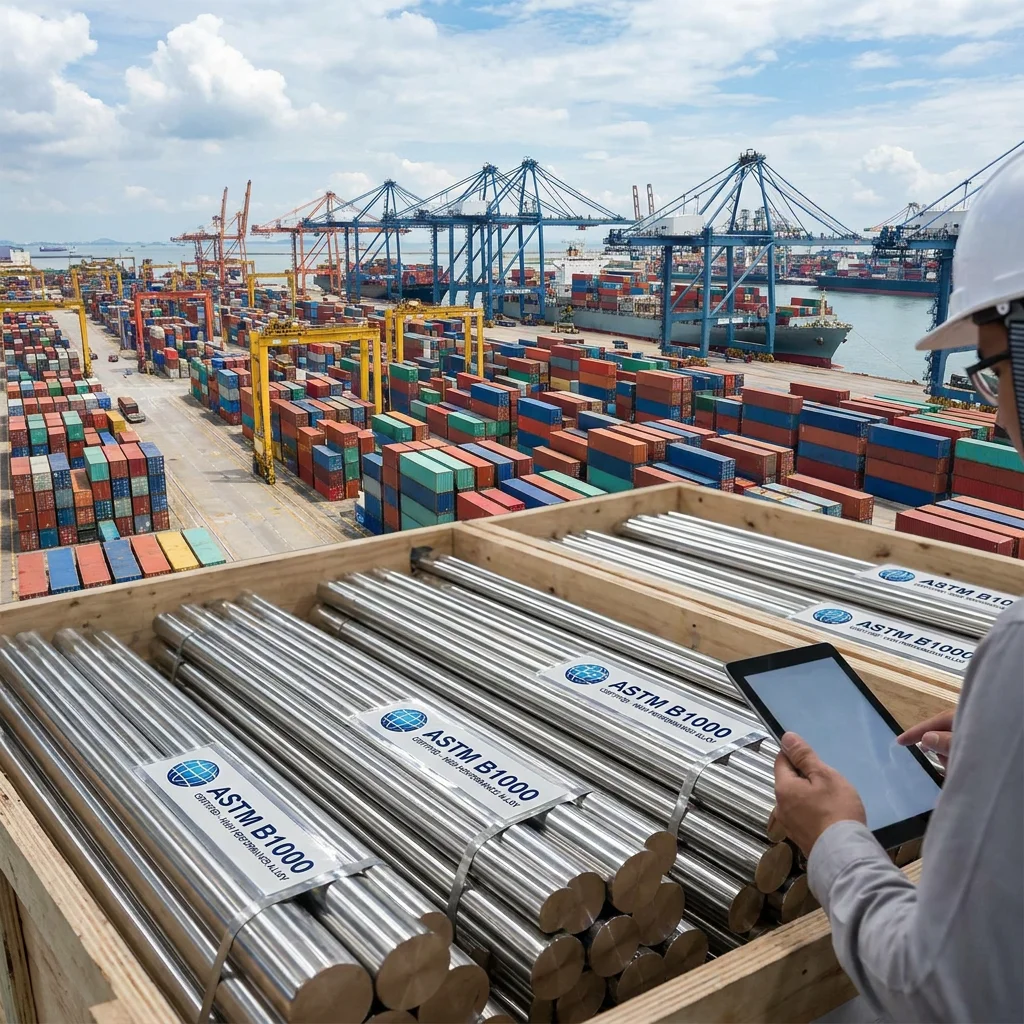
Global Alloy Sourcing Landscape 2026: Technical Compliance and Strategic Procurement
Introduction: The New Paradigm of Alloy Procurement
As we navigate through 2026, the global industrial landscape has undergone a profound transformation. The "just-in-time" delivery models of the previous decade have been replaced by "just-in-case" resilience strategies. In the realm of high-performance alloys—materials essential for aerospace, maritime engineering, chemical processing, and renewable energy—the stakes have never been higher.
The year 2026 marks a critical juncture where technical compliance, geopolitical shifts, and technological innovation converge. For B2B procurement professionals, sourcing is no longer merely a transaction of price per kilogram; it is a complex exercise in risk mitigation, quality assurance, and long-term partnership building. This article provides a comprehensive analysis of the current global alloy sourcing environment, offering actionable strategies for navigating the complexities of 2026 and beyond.
1. Industry Analysis: High-Performance Alloys in 2026
The demand for high-performance alloys—including nickel-based superalloys, corrosion-resistant copper-nickel (CuNi) blends, and specialized resistance wires—has surged. Several key industries are driving this growth:
Aerospace and Defense
The aerospace sector continues to demand materials that can withstand extreme temperatures and pressures. Inconel and Hastelloy variants are at the forefront, particularly in the production of next-generation turbine engines and heat exchangers. As commercial space flight becomes more localized, the demand for aerospace-grade alloys has expanded globally, stressing traditional supply chains.
Green Energy Transition
The push for carbon neutrality has accelerated the need for alloys used in hydrogen production, offshore wind farms, and advanced nuclear reactors. Corrosion resistance is paramount in these applications. Monel and CuNi 70/30 are increasingly utilized in seawater cooling systems and electrolytic cells, where longevity in harsh environments is a prerequisite for project ROI.
Chemical and Petrochemical Processing
With the global shift toward more efficient and cleaner chemical processes, the industry has turned to Hastelloy C276 and Incoloy 825. These materials offer unmatched resistance to localized corrosion and stress-corrosion cracking, ensuring safety and uptime in high-acid environments.
2. Technical Compliance: Navigating ASTM, UNS, and ISO Standards
In 2026, "technical compliance" is the primary filter through which all reputable suppliers must pass. For B2B buyers, understanding the nuances of international standards is critical to avoiding catastrophic failures.
The ASTM International Framework
ASTM (American Society for Testing and Materials) remains the gold standard for defining the physical, chemical, and mechanical properties of alloys.
ASTM B163/B165: Critical for nickel and nickel alloy seamless pipes and tubes (e.g., Monel 400).
ASTM B127: Covers nickel-copper alloy plate, sheet, and strip.
ASTM B444: Essential for Inconel 625 pipe and tube specifications.
The Unified Numbering System (UNS)
To eliminate confusion across different trade names and regional standards, the UNS provides a systematic identification of metals and alloys.
UNS N10276 (Hastelloy C276): High molybdenum content for extreme corrosion resistance.
UNS N06600 (Inconel 600): Resistance to oxidation and carbonization.
UNS C70600 (CuNi 90/10): Standard for marine applications.
Quality Documentation: The MTR
In the current landscape, a Material Test Report (MTR) is non-negotiable. It must provide a full chemical analysis, mechanical property verification, and heat number traceability. Procurement teams must now also look for "Digital MTRs" that are blockchain-verified to prevent the surging trend of fraudulent documentation in secondary markets.
3. Addressing Pain Points: Quality Verification and Supply Chain Instability
Despite technological advancements, B2B buyers in 2026 face two persistent challenges: quality discrepancies and supply chain volatility.
The Challenge of Quality Verification
The global market has seen an influx of "specification-equivalent" alloys that often fall short in high-stress applications. Minor deviations in trace elements can lead to premature stress-corrosion cracking or reduced fatigue life.
Strategic Solution: Implement third-party PMI (Positive Material Identification) testing at the port of origin. Partnering with manufacturers like DLX Factory ensures that in-house testing labs are ISO 17025 accredited, providing buyers with an extra layer of security before the material leaves the factory floor.
Supply Chain Instability
Geopolitical tensions and route diversions have made delivery timelines unpredictable. The Red Sea crisis and evolving trade tariffs between major economies have extended lead times for certain specialty alloys from weeks to months.
Strategic Solution: Shift from "Transactional Sourcing" to "Relationship Sourcing." Buyers are increasingly securing "Capacity Reservations" with major exporters to ensure priority in the production queue during periods of raw material shortages.
4. Procurement Strategies for B2B Buyers in 2026
To thrive in this environment, procurement managers must adopt a more holistic and data-driven approach.
Multi-Sourcing and Geographic Diversification
Relying on a single region for critical alloys is a risk few companies can afford in 2026. However, diversification should not come at the expense of quality. The most successful firms are "Tiering" their suppliers:
Primary Tier: High-capacity, technologically advanced manufacturers in China (e.g., DLX Factory) for bulk and specialty production.
Secondary Tier: Local distributors for emergency inventory and small-lot processing.
Buffer Stock and Inventory Management
While 2026 sees advanced AI-driven demand forecasting, the "buffer stock" remains a necessity. Forward-thinking companies are now holding 3-6 months of critical alloy inventory, often managed through Vendor Managed Inventory (VMI) programs with their primary exporters.
Total Cost of Ownership (TCO) vs. Unit Price
In 2026, the savvy buyer looks at TCO. A cheaper alloy that requires more frequent replacement or lacks proper ASTM documentation can lead to millions in downtime costs. Strategic procurement involves calculating the lifecycle cost, including the cost of logistics, compliance auditing, and failure risk.
5. Global Logistics and China’s Evolving Role
China remains the epicenter of the global alloy supply chain, but its role has evolved from a "low-cost provider" to a "high-tech manufacturing hub."
The Rise of High-Value Exports
Chinese exporters, led by industry veterans such as DLX Factory, have invested heavily in R&D and advanced melting technologies (like Vacuum Induction Melting - VIM and Electroslag Remelting - ESR). This has allowed Chinese manufacturers to dominate the production of complex alloys like Incoloy and high-resistance heating wires.
Logistics Innovations in 2026
The logistics landscape is defined by "Smart Corridors." Digital freight platforms now provide real-time visibility into shipping containers, including temperature and humidity monitoring for sensitive alloy products.
The Silk Road Initiative 2.0: Improved rail links between East Asia and Europe have provided a viable alternative to sea freight, reducing transit times for alloy tubes and wires by up to 40% compared to traditional ocean routes.
Environmental Compliance
China's "Green Manufacturing" initiatives mean that exporters must now comply with strict carbon footprint reporting. B2B buyers in Europe and North America are increasingly selecting Chinese partners who can provide "Carbon Intensity Certificates" for their alloy production processes.
6. Spotlighting a Leader: DLX Factory
In the complex landscape of 2026, DLX Factory (also known as DLX Alloy) stands out as a quintessential example of the modern Chinese exporter. Established in 2002, the company has spent over two decades refining its metallurgical processes.
Technical Expertise
DLX Factory specializes in the "Big Four" of high-performance alloys:
CuNi (Copper-Nickel): Essential for marine engineering.
Monel: The gold standard for resistance to hydrofluoric acid and seawater.
Hastelloy: Unmatched for aggressive chemical environments.
Incoloy/Inconel: Critical for high-temperature stability.
Quality Assurance at Scale
As an ISO 9001-certified manufacturer, DLX Factory integrates quality control at every stage—from the selection of raw nickel and chromium to the final drawing of ultra-fine resistance wires. Their commitment to international standards (ASTM, UNS, DIN, and JIS) makes them a preferred partner for Fortune 500 companies in the energy and aerospace sectors.
7. FAQ Module: Alloy Sourcing in 2026
Q: What is the most critical factor when selecting an alloy supplier in 2026?
A: Beyond price, technical compliance (ASTM/UNS) and the ability to provide verified, traceable Material Test Reports (MTRs) are the most critical factors. A supplier’s track record in handling complex logistics is a close second.
Q: How are 2026 trade tariffs affecting alloy prices?
A: Tariffs remain volatile. However, many B2B buyers are mitigating this by using "In-Bond" storage or sourcing from manufacturers like DLX Factory, who offer comprehensive documentation to navigate customs efficiently and minimize unexpected duties.
Q: Why is CuNi 70/30 preferred over 90/10 in some applications?
A: While 90/10 is sufficient for many marine environments, CuNi 70/30 (UNS C71500) offers higher resistance to erosion-corrosion and better strength, making it the standard for high-velocity naval applications in 2026.
Q: Can I source aerospace-grade Inconel 625 from China?
A: Yes. Leading Chinese manufacturers like DLX Factory utilize VIM/ESR melting technologies to produce Inconel 625 that meets or exceeds international aerospace standards.
Q: What is the typical lead time for custom alloy tubes in 2026?
A: Depending on the alloy complexity and volume, lead times currently range from 8 to 14 weeks. Utilizing rail freight can often shave 2-3 weeks off this timeline for Eurasian deliveries.
8. Conclusion: Building a Resilient Future
The global alloy sourcing landscape of 2026 requires a blend of technical acumen, strategic foresight, and cultural intelligence. As industries push the boundaries of what is possible—building deeper in the ocean, flying higher in the atmosphere, and creating cleaner energy—the materials that support these endeavors must be beyond reproach.
By prioritizing technical compliance, embracing multi-sourcing strategies, and partnering with established leaders like DLX Factory, B2B buyers can navigate the uncertainties of the global supply chain. The future belongs to those who view their supply chain not as a series of costs, but as a strategic asset built on quality, transparency, and trust.
For more information on high-performance alloys or to request a technical consultation, visit www.dlx-factory.com.