The 2026 Technical Guide to High-Performance Alloys: Comparative Analysis of Copper-Nickel, Monel, Hastelloy, and Incoloy in Industrial Engineering
The 2026 Technical Guide to High-Performance Alloys: Comparative Analysis of Copper-Nickel, Monel, Hastelloy, and Incoloy in Industrial Engineering
Published on: June 8, 2026
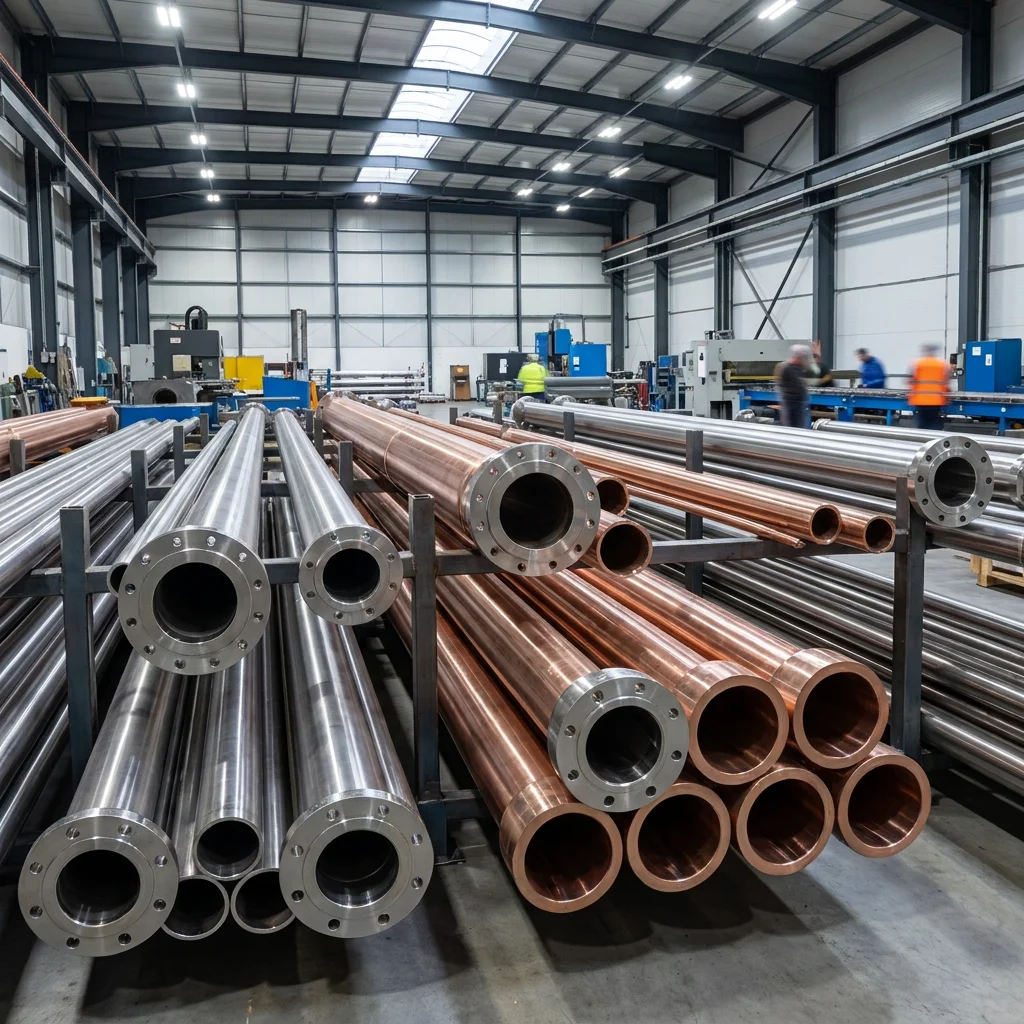
Introduction: The Evolution of High-Performance Alloys in 2026
In the rapidly advancing landscape of industrial engineering, the demand for materials that can withstand extreme environments is at an all-time high. As we navigate through 2026, industries such as deep-sea exploration, green hydrogen production, aerospace, and advanced chemical processing require more than just standard stainless steels. They require high-performance alloys—sophisticated metal systems engineered for specific chemical resistances and mechanical properties.
This technical guide provides an in-depth comparative analysis of four critical alloy families: Copper-Nickel (CuNi), Monel, Hastelloy, and Incoloy. Each of these materials offers unique advantages that make them indispensable in modern B2B manufacturing and heavy industry. Understanding their nuances is crucial for engineers and procurement specialists aiming to optimize equipment lifespan and operational safety.
1. Copper-Nickel Alloys (CuNi): The Marine Industry Standard
Copper-Nickel alloys, often referred to as Cupronickel, have remained a cornerstone of maritime engineering for decades. In 2026, their importance has only grown with the expansion of offshore wind farms and desalination plants.
Chemical Composition and Properties
The two most common grades are CuNi 90/10 (C70600) and CuNi 70/30 (C71500). The addition of nickel significantly improves the corrosion resistance of copper, while small amounts of iron and manganese are added to enhance resistance to erosion-corrosion and impingement in high-velocity seawater.
Key Advantages
- Biofouling Resistance: One of the most distinctive features of Copper-Nickel is its natural resistance to the growth of barnacles, algae, and other marine organisms. This eliminates the need for toxic anti-fouling coatings in many applications.
- Excellent Ductility: These alloys are easy to fabricate, weld, and bend, making them ideal for complex piping systems.
- Stress Corrosion Cracking (SCC) Resistance: Unlike many stainless steels, CuNi alloys are highly resistant to chloride-induced SCC.
Modern Applications in 2026
Beyond traditional shipbuilding, Copper-Nickel is now extensively used in the heat exchangers of thermal desalination units and the cooling systems of coastal power plants. Its antimicrobial properties have also seen it adapted into specialized industrial HVAC systems where hygiene and durability are paramount.
2. Monel Alloy s: The Power of Nickel-Copper
Monel is a group of nickel-based alloys primarily composed of nickel (up to 67%) and copper. It is a "solid-solution" alloy that can only be hardened by cold working. In the 2026 industrial sector, Monel remains the go-to choice for environments involving hydrofluoric acid and high-pressure oxygen.
Grades: Monel 400 vs. Monel K-500
Monel 400 is the workhorse of the family. It exhibits high strength and excellent corrosion resistance in a range of acidic and alkaline environments. It is particularly resistant to rapidly flowing seawater.
Monel K-500 adds aluminum and titanium to the nickel-copper base, allowing for age-hardening (precipitation hardening). This results in significantly higher strength and hardness compared to Monel 400, while maintaining similar corrosion resistance. It is non-magnetic down to very low temperatures, a property valued in sensitive electronic and oil-well drilling equipment.
Industrial Utility
Monel's resistance to hydrofluoric acid makes it vital in the alkylation units of oil refineries. In 2026, it is also a key material in the construction of marine shafts, valves, and pumps where mechanical failure is not an option.
3. Hastelloy: Extreme Corrosion Resistance
When the environment becomes too aggressive for Monel or stainless steel, engineers turn to Hastelloy. These nickel-molybdenum-chromium alloys are designed for the most severe chemical processing conditions.
The Versatility of Hastelloy C-276
Hastelloy C-276 is perhaps the most versatile corrosion-resistant alloy available today. It contains high levels of molybdenum, which provides exceptional resistance to pitting and crevice corrosion. Its low carbon content minimizes carbide precipitation during welding, maintaining its corrosion resistance in as-welded structures.
Applications in "Green" Chemistry
As 2026 sees a shift toward more sustainable but often chemically aggressive "green" chemical processes, Hastelloy C-22 and C-276 are being utilized in reactors handling organic acids and mixed chemical waste. They are also indispensable in Flue Gas Desulfurization (FGD) systems for remaining coal-fired plants and waste-to-energy facilities.
4. Incoloy: High-Temperature Stability and Oxidation Resistance
Incoloy alloys are nickel-iron-chromium based. They are designed for applications requiring high-temperature strength and resistance to oxidation and carburization. They are essentially the "cost-effective" cousins of the Inconel family, offering high performance by utilizing a higher iron content.
Incoloy 800, 800H, and 825
- Incoloy 800/800H: Used for heat-treating equipment and petrochemical furnace tubes. They maintain their structure even under prolonged exposure to high temperatures.
- Incoloy 825 : Contains additions of molybdenum, copper, and titanium. This makes it exceptionally resistant to both reducing and oxidizing acids, as well as chloride-induced stress corrosion cracking. It is a preferred material for downhole oil and gas applications.
Comparative Technical Data
To assist in material selection, the following tables summarize the chemical and mechanical profiles of these alloy families as of the 2026 standard.
Table 1: Chemical Composition Comparison (Typical Values %)
| Alloy Type | Nickel (Ni) | Copper (Cu) | Chromium (Cr) | Molybdenum (Mo) | Iron (Fe) |
|---|---|---|---|---|---|
| CuNi 90/10 | 9.0 - 11.0 | Remainder | - | - | 1.0 - 1.8 |
| Monel 400 | 63.0 min | 28.0 - 34.0 | - | - | 2.5 max |
| Hastelloy C-276 | Remainder | - | 14.5 - 16.5 | 15.0 - 17.0 | 4.0 - 7.0 |
| Incoloy 825 | 38.0 - 46.0 | 1.5 - 3.0 | 19.5 - 23.5 | 2.5 - 3.5 | 22.0 min |
Table 2: Mechanical Properties Comparison (Annealed State)
| Alloy | Tensile Strength (MPa) | Yield Strength (0.2% Offset, MPa) | Elongation (%) | Hardness (Rockwell B) |
|---|---|---|---|---|
| CuNi 90/10 | 275 - 415 | 105 - 170 | 30 - 40 | 60 - 75 |
| Monel 400 | 550 min | 240 min | 35 min | 60 - 80 |
| Hastelloy C-276 | 760 min | 350 min | 40 min | 87 - 92 |
| Incoloy 825 | 585 min | 240 min | 30 min | 75 - 85 |
5. Strategic Selection Criteria for 2026 Projects
Choosing the right alloy requires a comprehensive understanding of the operational environment. Here are the key factors engineers must consider:
Operating Temperature
For cryogenic applications, Monel 400 and Copper-Nickel are excellent as they maintain their toughness at sub-zero temperatures. For high-temperature service (above 500°C), Incoloy 800H is the superior choice due to its creep resistance. Hastelloy C-276 can handle elevated temperatures but is primarily selected for its corrosion resistance rather than pure thermal stability.
Corrosive Media
If the primary concern is seawater or brackish water, Copper-Nickel offers the most cost-effective solution with the added benefit of biofouling resistance. If the environment involves reducing acids (like sulfuric or hydrochloric) or oxidizing salts, Hastelloy is necessary. Incoloy 825 provides a middle ground, offering excellent resistance to sulfuric and phosphoric acids at a lower price point than Hastelloy.
Mechanical Loading
In applications where high torque or tensile stress is applied, such as in pump shafts or heavy-duty fasteners, Monel K-500 (precipitation-hardened) or Hastelloy grades provide the necessary strength. Copper-Nickel, while durable, is generally not used for high-stress structural components.
6. Manufacturing and Fabrication Trends in 2026
The fabrication of high-performance alloys has evolved significantly. In 2026, we see a heavy integration of Additive Manufacturing (3D Printing) with nickel-based alloys. Hastelloy and Incoloy powders are now commonly used in Laser Powder Bed Fusion (LPBF) to create complex heat exchanger geometries that were previously impossible to machine.
Furthermore, welding technologies have improved. Pulse-TIG and advanced plasma welding techniques allow for thinner gauges of Hastelloy to be used without compromising the integrity of the heat-affected zone (HAZ). This allows for lighter equipment design in aerospace and mobile offshore units.
7. Sustainability and the Lifecycle of Nickel Alloys
As part of the global push toward a circular economy, the recyclability of these alloys is a major focus in 2026. Nickel and Copper are 100% recyclable without loss of quality. The high initial investment in a Monel or Hastelloy component is often offset by its extremely long service life and high scrap value at the end of its lifecycle. For many industrial firms, this "Life Cycle Cost" (LCC) analysis is now the standard for procurement, replacing the "Lowest Initial Cost" model.
8. Case Study: Green Hydrogen Infrastructure
In 2026, the green hydrogen revolution is in full swing. Electrolyzers, which split water into hydrogen and oxygen using renewable energy, require materials that can handle high-pressure gases and potentially corrosive electrolytes. Incoloy 825 and Hastelloy C-276 are currently being used in the balance-of-plant components and electrode frames due to their resistance to hydrogen embrittlement and their ability to maintain purity in the gas stream.
Conclusion: The Future of Alloy Engineering
The "The 2026 Technical Guide to High-Performance Alloys" highlights that there is no single "best" material. The choice between Copper-Nickel, Monel, Hastelloy, and Incoloy depends on a delicate balance of chemical environment, physical stress, temperature, and budget. As industrial processes become more complex and environmental regulations more stringent, the role of these specialized alloys will only become more prominent.
For engineers and procurement professionals, staying updated on the latest ASTM and ASME standards for these materials is essential. The durability and reliability of our global infrastructure depend on the informed application of these high-performance materials.
Expert Consultation and Sourcing
Are you planning a project that requires high-performance alloys? Whether you need custom-fabricated Copper-Nickel piping, Monel valves, or Hastelloy reactors, our technical team is here to assist with material selection and specification compliance.
Contact us via the website inquiry form to discuss your specific industrial requirements and receive a detailed technical quote.
Author: Industrial Materials Engineering Editorial Team
Copyright © 2026 DLX Factory. All rights reserved.